
Meta Description
Global demand for steel drums is increasing due to growth in chemicals, petroleum, lubricants, coatings, and industrial packaging. Learn why oil drum production lines are becoming a smart investment.
Steel Drums Remain Essential in Global Industrial Packaging
Although plastic containers and IBC tanks are widely used today, steel drums still play an important role in global industrial packaging. They are strong, recyclable, stackable, and suitable for transporting many kinds of liquid, semi-liquid, and solid materials.
Steel drums are commonly used for:
- Lubricating oil
- Chemicals
- Paints and coatings
- Solvents
- Petroleum products
- Adhesives
- Food-grade industrial materials
- Hazardous and non-hazardous materials
Because of their strength and safety performance, steel drums remain one of the most trusted packaging solutions for heavy-duty industrial use.
According to recent market data, the industrial drums market is expected to grow steadily in the coming years, supported by chemical output, petrochemical investment, and export packaging demand. Steel drums continue to hold a major position because they are suitable for heavy-duty and hazardous material applications.
Why Oil Drum Demand Is Increasing
The demand for oil drums is closely linked to industrial activity. When production, construction, energy, chemicals, coatings, and machinery industries grow, the need for safe packaging also increases.
Several international trends are driving steel drum demand.
First, chemical and petroleum industries continue to expand in many regions. These industries require reliable packaging for safe storage and transportation.
Second, lubricating oil and industrial oil consumption remains strong in manufacturing, mining, automotive maintenance, marine, and heavy equipment sectors.
Third, international trade requires standardized packaging. Export products must be packed safely to reduce leakage, contamination, and damage during long-distance transportation.
Finally, many customers prefer steel drums because they can be reused or reconditioned. This fits the global trend toward sustainable industrial packaging.
A Complete Oil Drum Production Line Is More Than One Machine
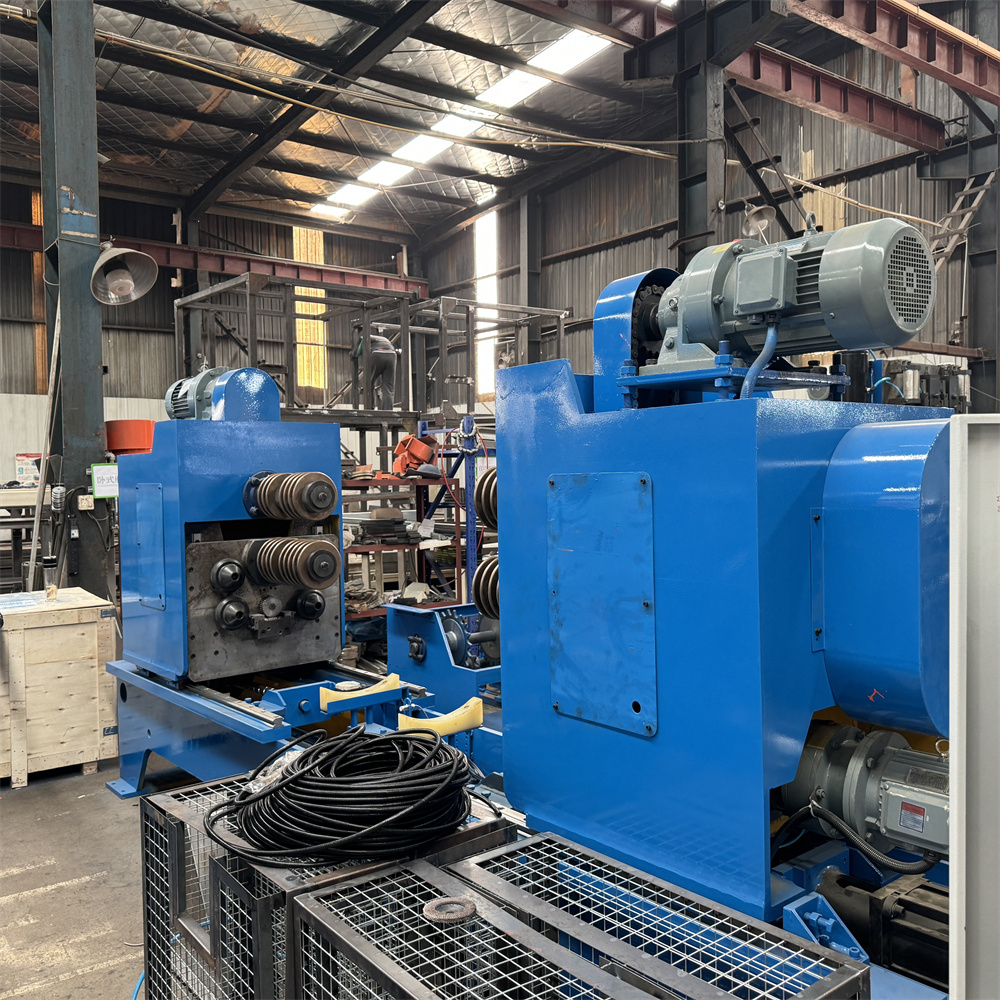
A standard oil drum production line usually includes several key production sections. Each section directly affects the final drum quality, appearance, leakage performance, and production efficiency.
A complete steel oil drum production line may include:
- Steel sheet cutting or coil feeding
- Drum body rolling
- Longitudinal seam welding
- Weld seam flattening
- Drum body expanding
- Beading and corrugation
- Bottom and top lid production
- Flanging
- Seaming
- Leakage testing
- Surface pretreatment
- Painting or powder coating
- Drying oven
- Printing or heat transfer
- Final inspection and packing
For 200L steel drums, body welding and seaming quality are especially important. If the welding is unstable or the seaming is not accurate, the drum may leak during filling, storage, or transportation.
Therefore, customers who want to build a professional oil drum factory should pay attention not only to machine price, but also to production process design and equipment stability.
Automation Helps Manufacturers Improve Competitiveness
In many countries, labor cost is rising and skilled workers are becoming harder to find. As a result, automatic and semi-automatic oil drum production lines are becoming more attractive.
Automation can help factories improve:
- Production speed
- Welding consistency
- Seaming quality
- Drum appearance
- Labor cost control
- Safety during operation
- Product standardization
- Long-term production stability
For new investors, an automatic oil drum production line can help build capacity quickly. For existing factories, upgrading key machines such as drum welding machines, seaming machines, painting lines, and leakage testing machines can improve product quality and reduce rejection rates.
Different Customers Need Different Production Solutions
Not every customer needs the same oil drum production line. The best solution depends on the customer’s product type, production capacity, local labor cost, investment budget, and technical experience.
For example, some customers need a full 200L steel drum production line from steel sheet to finished drum. Some customers only need a drum body welding machine to replace old equipment. Others may need a top and bottom lid production line, painting line, heat transfer printing machine, or drum oven.
Common oil drum equipment includes:
- Drum body rolling machine
- Longitudinal seam welding machine
- Weld seam flattening machine
- Drum body forming machine
- Drum flanging machine
- Drum seaming machine
- Drum leakage testing machine
- Drum lid production line
- Drum clamp ring production equipment
- Drum painting line
- Drum drying oven
- Heat transfer printing machine
A professional supplier should recommend the right configuration instead of simply selling a standard machine.
Local Drum Production Can Reduce Import Dependence
In many markets, steel drums are still imported from other countries. However, import costs, long shipping time, unstable freight rates, and local packaging requirements are pushing more companies to consider local production.
Local oil drum manufacturing can bring several advantages:
- Shorter delivery time
- Lower transportation cost
- Better response to local customers
- Flexible drum size and design
- Easier quality control
- Stronger competitiveness in local tenders
- Better after-sales service for industrial customers
For countries with growing oil, chemical, coating, and manufacturing industries, local drum production has strong business potential.
Conclusion
The global demand for industrial packaging continues to grow, and steel drums remain an important product for oil, chemicals, coatings, and other industrial materials. With increasing demand for safe, reusable, and standardized packaging, investing in a reliable oil drum production line can help manufacturers capture new market opportunities.
For customers planning to build or upgrade a steel drum factory, choosing the right production equipment is the key to improving quality, efficiency, and long-term competitiveness.