
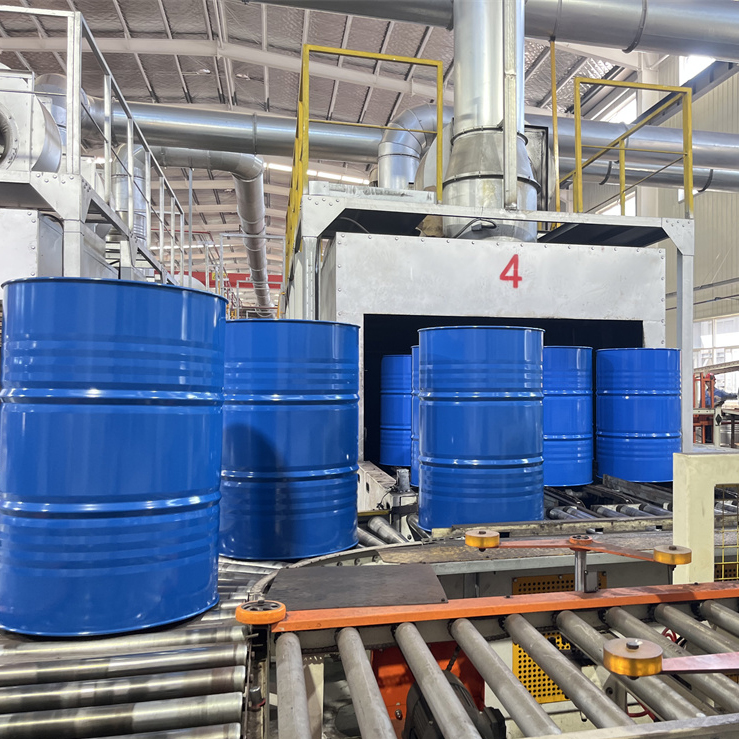
In steel drum manufacturing, appearance is only one part of the surface treatment process. A well-planned painting line and post-treatment system also help improve product protection, production consistency, and brand presentation. For factories that produce drums for oil, chemicals, coatings, food-related industrial use, or bitumen packaging, the finishing stage plays a major role in the final market value of every barrel.
A drum that leaves the factory with a clean surface, stable coating, and uniform finish reflects the overall quality of the production line. It tells customers that the manufacturer pays attention to details, process control, and long-term product performance. That is why more drum producers now focus not only on forming and welding equipment, but also on reliable painting and post-treatment solutions.
The Role of Painting and Post-Treatment in Drum Production
After the drum body is formed, welded, and tested, the surface still needs proper treatment before the final product is ready for delivery. Without effective post-treatment, the coating result may look uneven, adhesion may weaken, and the drum may fail to present the quality image that customers expect.
A complete steel drum painting line usually includes several connected stages. Depending on the project, these may involve surface cleaning, pretreatment, drying, painting, curing, cooling, and transfer. Some factories also need printing or marking integration to support product identification and branding.
Post-treatment is important because coating performance starts long before the paint reaches the metal surface. If the surface is not clean and prepared correctly, even a good painting unit cannot deliver the best result. That is why a complete system matters more than a single painting machine.
More Than Color: Why Surface Finish Matters
Customers often notice color, gloss, and visual neatness first, but manufacturers know the finishing stage affects much more than appearance. A properly designed painting and post-treatment process supports coating uniformity, production rhythm, and overall product value.
For industrial drums, a stable surface finish can help create a more professional look for export markets and industrial supply chains. It also supports consistent batch production, which is important when customers expect the same appearance and quality across large orders.
For factories serving international buyers, drum appearance can influence first impressions during inspections, shipment preparation, and customer visits. A clean, evenly coated barrel often communicates reliability before the customer even checks technical details.
Flexible Solutions for Different Production Needs
Not every drum factory needs the same painting configuration. Some customers require a compact line for standard steel barrels. Others need a higher-capacity system for continuous production. Some projects focus on exterior painting only, while others need broader post-treatment arrangements depending on product use and customer requirements.
This is why a good equipment supplier should study the customer’s drum size, target capacity, workshop layout, coating process, and production goals before proposing a solution. For example, a factory producing 200L to 220L steel drums may need one type of layout, while another plant with different product types or speed expectations may need a different arrangement.
A flexible system can also support future expansion. As production grows, the manufacturer may want to add conveyors, drying sections, printing units, or additional handling functions. Planning for that possibility at an early stage helps avoid unnecessary modification later.
Key Advantages of a Modern Drum Painting Line
A modern steel drum painting and post-treatment system can bring several practical advantages to production.
First, it helps improve finish consistency. When drum transfer, spraying, drying, and discharge work in coordination, the final appearance becomes more uniform from one barrel to the next.
Second, it supports production efficiency. Instead of managing each step separately, the factory can run a more connected and organized workflow. This helps reduce delays between finishing stages and keeps output more stable.
Third, it strengthens product presentation. A neat and professional coating result can add value in competitive markets, especially for export-oriented manufacturers that want to show reliable production standards.
Fourth, it helps reduce rework. When the process stays stable and surface preparation is handled correctly, the factory spends less time correcting visible defects or repeating finishing work.
Choosing the Right Partner for Finishing Equipment
Buying a drum painting line is not only about selecting a spray unit or oven. The real question is whether the full system matches the factory’s production logic. A strong supplier should understand the relationship between drum handling, surface preparation, coating application, drying, and final output.
This project-based approach often creates better long-term results. Instead of purchasing separate machines without coordination, the customer receives a solution that fits the product, the plant, and the expected output. That usually leads to easier installation, smoother operation, and clearer technical communication.
A Better Finish Supports a Stronger Brand
In the drum industry, surface finishing is where manufacturing quality becomes visible. Welding strength and forming precision matter, but the painted exterior is what customers, inspectors, and end users often see first. A strong painting line and post-treatment system help manufacturers deliver drums that look reliable, consistent, and ready for industrial use.
For companies that want to improve both efficiency and product image, investing in the right steel drum painting line is a practical step. It helps create a cleaner production flow, a more stable finishing result, and a better presentation for every drum that leaves the factory.
If you are planning a new steel drum manufacturing project or upgrading an existing plant, a reliable painting and post-treatment solution can help you build a more complete and competitive production line.