
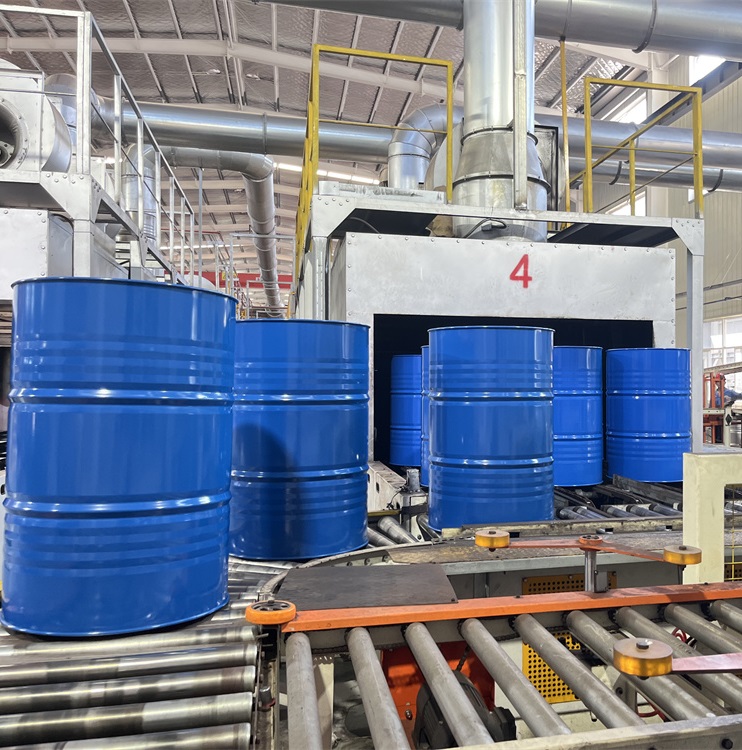
In the global industrial supply chain, packaging plays a role far greater than simple containment. It is a critical element in ensuring safety, regulatory compliance, logistics efficiency, and long-term cost control. Among all forms of industrial packaging, steel drums have maintained a strong and stable position for decades. Their durability, strength, and reliability make them indispensable for industries such as oil and gas, chemicals, coatings, lubricants, food ingredients, and pharmaceutical raw materials.
As global trade continues to expand and transportation regulations become increasingly strict, the demand for high-quality steel drums remains steady. Companies transporting hazardous liquids require packaging that meets international standards while maintaining structural integrity across long-distance shipping routes. Steel drums provide excellent mechanical strength, superior sealing performance, and high stacking stability, which makes them particularly suitable for demanding industrial environments.
At the same time, the manufacturing side of the industry is undergoing significant transformation. Traditional drum production once relied heavily on manual labor, which often resulted in inconsistent quality and limited production capacity. Today, modern production lines integrate automatic uncoiling, precision forming, seam welding, flanging, beading, leak testing, and advanced coating systems into a streamlined workflow. Automation not only increases output but also ensures consistent welding strength, improved dimensional accuracy, and reduced material waste. For drum manufacturers competing in international markets, investing in advanced production equipment has become a strategic necessity rather than a choice.
Environmental considerations are also reshaping the steel drum sector. Sustainability is no longer a marketing concept; it is a purchasing requirement for many multinational buyers. Steel drums offer a strong advantage in this regard because they are fully recyclable and can be reconditioned for reuse. Compared with many alternative packaging materials, steel provides a longer service life and a lower overall lifecycle impact. As more companies commit to ESG standards and carbon reduction goals, sustainable drum production and energy-efficient manufacturing processes are becoming key differentiators.
Emerging markets are contributing significantly to industry growth. Rapid industrialization in regions across Asia, Africa, and South America is driving increased demand for chemical and lubricant packaging solutions. Local manufacturers are upgrading their facilities to improve productivity, meet export compliance standards, and reduce defect rates. This transition creates opportunities not only for drum producers but also for equipment providers capable of delivering reliable and intelligent manufacturing solutions.
Looking ahead, digitalization and smart manufacturing technologies are gradually entering the steel drum production environment. Real-time monitoring systems, data-driven quality control, and predictive maintenance tools are helping factories reduce downtime and improve operational transparency. These technologies enable manufacturers to maintain stable output while adapting quickly to changes in market demand.
The steel drum industry may appear traditional at first glance, but it is evolving rapidly under the influence of automation, sustainability, and global trade expansion. Companies that embrace technological advancement and prioritize consistent quality will be better positioned to serve international markets and build long-term competitive advantages. In a world where industrial safety and reliability cannot be compromised, steel drums remain a trusted solution—and the future of their production lies in innovation and intelligent manufacturing.